
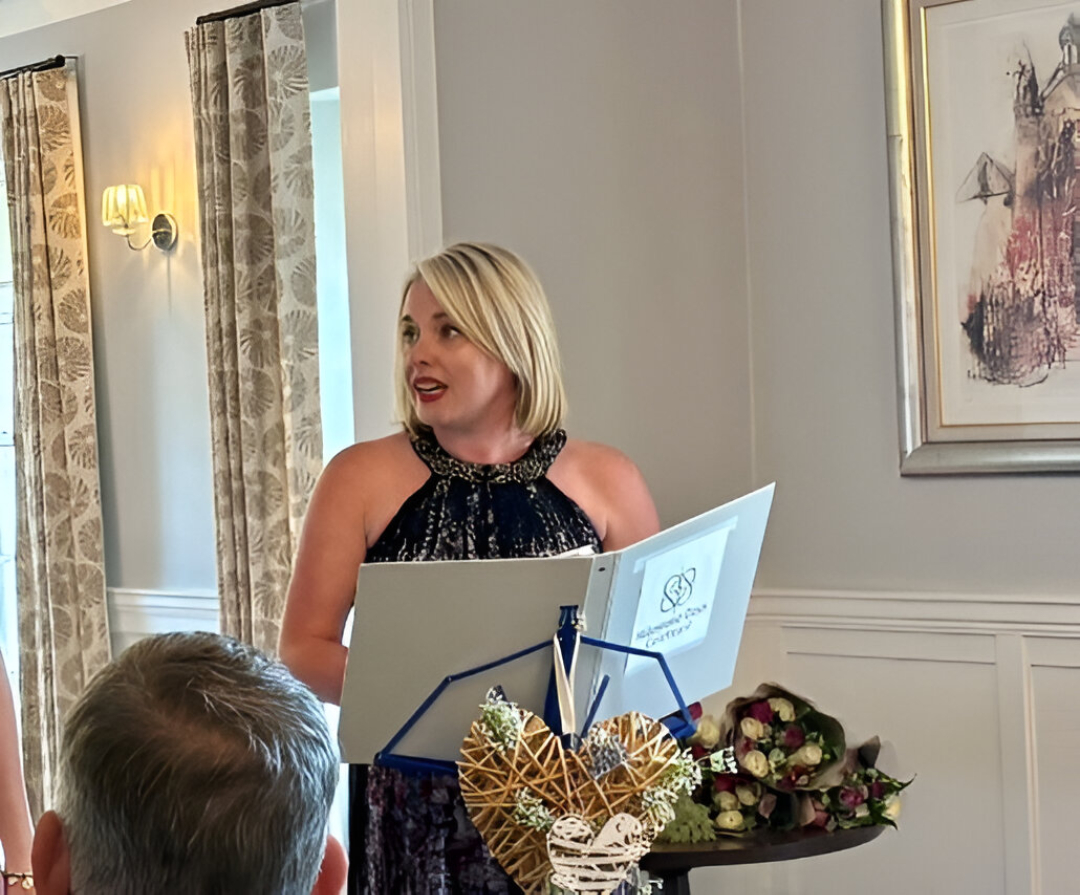
If you’d told me ten years ago that I’d be standing at the front of a wedding ceremony, ribbons in one hand and vows in the other, I’d probably have laughed and gone back to writing a blog.
But life has a funny way of connecting the dots, doesn’t it? Looking back, my years in marketing communications and as a training facilitator were actually the perfect preparation for becoming an independent celebrant here in Scotland. Who knew?
So, if you’re curious about how I went from PowerPoints and brand guidelines to handfastings and happily-ever-afters, let me share the transferable skills that got me here.
- Storytelling is my superpower
As a marcomms professional, storytelling was always at the heart of my work. Whether it was shaping a campaign, writing copy, or presenting an idea, I learned how to capture attention and connect with people.
Now, as a celebrant, storytelling is still what I do, but instead of brand stories, I tell love stories. Your love story. The one your guests will nod along to, laugh at, and maybe even shed a tear over.
(And let’s be honest — your story is a lot more fun to tell than a new product launch!)
- Confidence in public speaking
Years of delivering training sessions to rooms full of people gave me the confidence to stand up and speak with ease.
It also taught me something important: people don’t remember every single word you say, but they do remember how you made them feel. That’s exactly what I bring to a wedding ceremony; creating a space where everyone feels included, comfortable, and a little bit uplifted.
- Listening skills that go beyond “uh-huh”
As a facilitator, listening was just as important as speaking. To engage a group, you need to really hear what people are saying (and sometimes what they aren’t saying).
When I work with couples, that skill is invaluable. I don’t just ask how you met, I listen for the little details, the quirks, the way your faces light up when you talk about each other. That’s the gold that turns your ceremony from generic to unforgettable.
- Organisational skills (Yes, I’m a ‘to do list’ person)
Marcomms is nothing if not deadline-driven. Campaign launches, events, crisis comms; I learned to juggle a hundred moving parts and still keep my cool.
That organisational skill means your ceremony is in safe hands. Timings, scripts, vows, rituals, I’ll keep everything running smoothly so you can focus on enjoying the moment. (And yes, there may be a ‘to do list’ or two behind the scenes.)
- A sense of humour (because weddings should be joyful)
Training rooms taught me that a well-placed bit of humour can break the ice, calm nerves, and bring people together.
The same is true at weddings. I’ll never turn your ceremony into a stand-up routine (don’t worry!) but a subtle touch of humour, a knowing smile, or a perfectly timed anecdote can make a ceremony feel relaxed and real.
Why celebrancy feels like home
Becoming a celebrant has felt like the natural next step in my career. All the skills I honed in marcomms and training now come together in this role: writing, speaking, organising, listening, storytelling.
But more than that, celebrancy is about people. It’s about creating a ceremony that reflects you: your love, your personalities, your story. And that, to me, feels like the best job in the world.


