
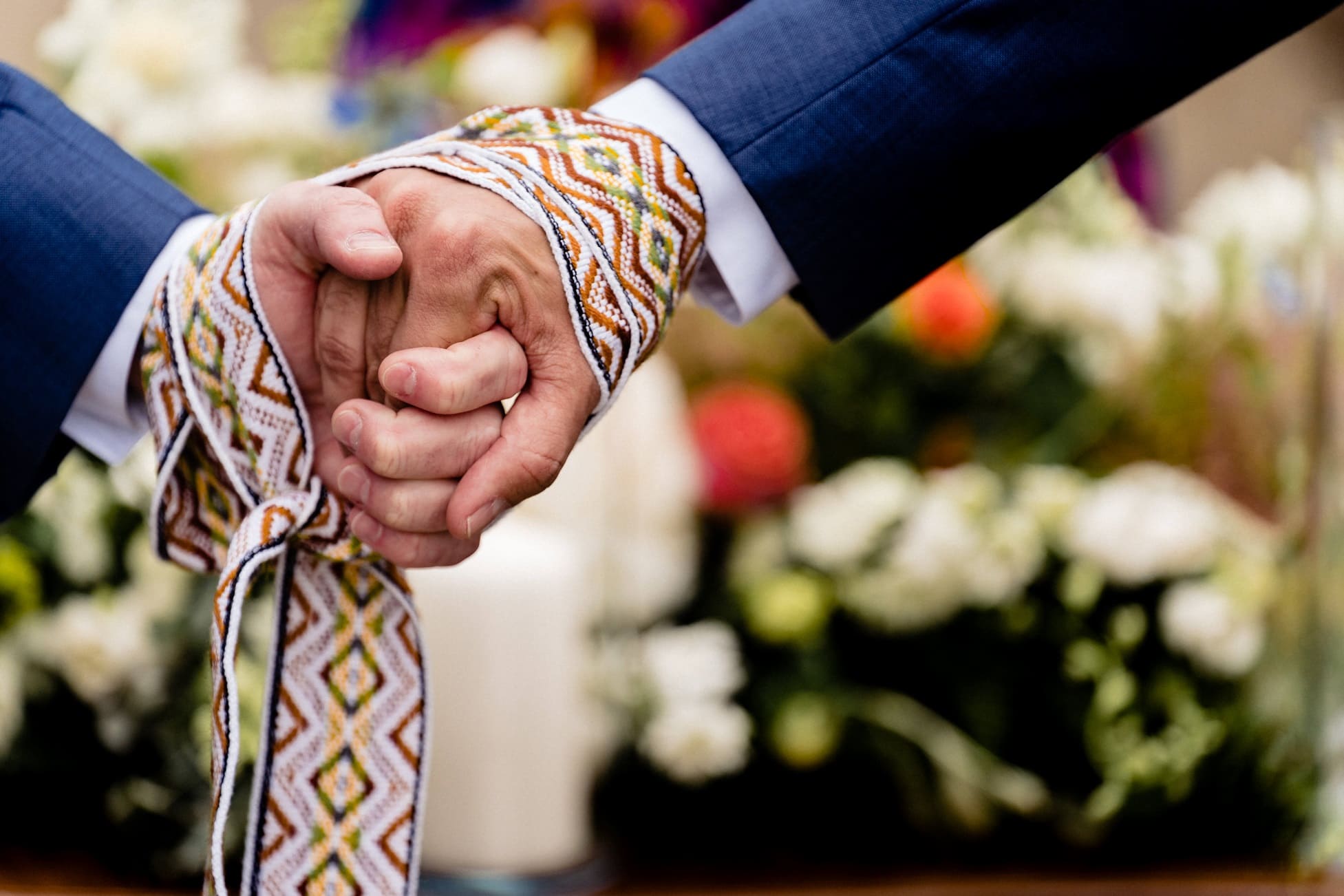
If you’ve ever wondered where the phrase “tying the knot” comes from, the answer lies in a beautiful old tradition: handfasting.
This symbolic ritual has deep Scottish and Celtic roots, and it’s making a big comeback in modern weddings. Whether you’re planning a romantic ceremony by a loch, a grand castle wedding, or something simple and intimate, handfasting is a stunning way to honour tradition while celebrating your love in a very personal way.
Let’s explore the history of handfasting, why couples still love it today, and how you can weave it into your own Scottish wedding.
A little history: What is handfasting?
Handfasting is an ancient Celtic ritual dating back hundreds of years. In Scotland, it was once seen as a form of betrothal, whereby couples would declare their intent to marry and have their hands bound together in front of witnesses.
It wasn’t always considered a full legal marriage, but more of a trial union (sometimes lasting “a year and a day”). Over time, it evolved into a recognised symbol of commitment, and eventually gave us the phrase “tying the knot.”
The act of binding hands together was deeply symbolic: two separate lives becoming one, physically connected by a bond of love and trust.
Why couples love handfasting today
Fast forward to today. Handfasting has found its place in modern weddings, not as a requirement, but as a beautiful choice.
Couples love handfasting because:
- It’s symbolic: It visually represents the moment your lives join together.
- It’s flexible: You can adapt it to suit your personalities, style, or beliefs.
- It’s inclusive: Family and friends can take part by placing ribbons or cords.
- It’s photogenic: The images of your hands bound together are incredibly moving.
- It connects you to history: Especially in Scotland, it’s a lovely nod to Celtic heritage.
Ways to make handfasting your own
The beauty of handfasting is that there’s no single “right” way to do it. You can keep it traditional, add a modern twist, or even mix the two. Here are some ideas:
Choose meaningful materials
- Tartan: Perfect for honouring Scottish heritage and family clans.
- Ribbon or cord: Pick colours that symbolise qualities you want in your marriage (e.g. red for passion, blue for trust, gold for joy).
- Fabric scraps: Use pieces from clothing with meaning (like your granny’s scarf, or fabric from your first date outfit).
Involve loved ones
Invite parents, siblings, or friends to place a ribbon each over your joined hands, layering them up before they’re tied. This can feel incredibly special, as it represents the support of your community in your marriage.
Blend it with vows
You could say your vows while your hands are bound, making the symbolism even stronger. Some couples like to include a line such as:
“As our hands are bound, so too are our hearts and lives.”
Keep the cords
After the ceremony, you can tie the ribbons or cords into a knot and keep them as a keepsake. Some couples frame theirs or place them in a memory box as a tangible reminder of your promises
When to include handfasting in the ceremony
Handfasting usually takes place after the vows and before the rings, but it can fit wherever feels right in your ceremony. Some couples choose it as the very centrepiece, while others add it as a symbolic extra.
Your celebrant will guide you on how to time it so it flows naturally with the rest of your ceremony.
Handfasting variations around Scotland
Because it’s such a flexible ritual, handfasting has lots of lovely variations. A few I’ve seen (and loved):
- Single Ribbon Handfasting: One ribbon used, often chosen for simplicity or symbolism.
- Multiple Ribbons Handfasting: Several ribbons layered by different family members.
- Circle Handfasting: Guests form a circle around the couple and pass the ribbons around before they’re tied.
- “Infinity Knot” Handfasting: The cords are tied in a figure of eight, symbolising eternity.
Every couple can make it their own, that’s the joy of it.
A modern take on tradition
What I love about handfasting is how it bridges the old and the new. On one hand (pun intended!), it’s rooted in Scottish history. On the other, it’s versatile enough to fit into even the most modern weddings.
You can keep it solemn and traditional… or make it light-hearted and playful. Some couples even choose to “DIY” their cords with friends beforehand as a fun pre-wedding activity.
Final thoughts
Handfasting is more than just a nod to tradition. It’s a powerful, visual way to show your love and commitment, and one that feels unique for a Scottish wedding.
Whether you keep it simple with a single ribbon or go all out with tartans, colours, and family involvement, it’s a ritual that will add depth, symbolism, and a touch of magic to your wedding day.
Because when you “tie the knot” at a wedding in Scotland, you’re not just saying words. You’re weaving your story, your heritage, and your future together; hand in hand.


